
1. Requirements Analysis
1) Large-scale Wi-Fi deployments must address the following scenarios:
2) Coverage Scope: Indoor (malls, stadiums, offices) or outdoor (campuses, plazas).
3) User Density: High concurrency (thousands of users) with multi-device access (phones, tablets, IoT).
4) Bandwidth: Support HD video streaming, video conferencing, and real-time data transmission.
5) Seamless Roaming: Zero handoff latency for VoWi-Fi and mobile workflows.
6) Management & Security: Centralized control, user authentication, and threat prevention.
2. Design Principles
1) High-Density Coverage: Optimize AP placement to eliminate dead zones.
2) Load Balancing: Dynamically allocate users across bands (2.4GHz/5GHz/6GHz) and APs.
3) Interference Mitigation: Auto-channel selection (DFS) and power adjustment.
4) Scalability: Future-proof for Wi-Fi 6E/7 upgrades.
5) Security: WPA3 encryption, guest network isolation, and AI-driven intrusion detection.
3. Technology & Hardware Selection
|
Technology/Device |
Use Case |
Advantages |
Limitations |
|
Wi-Fi 6/6E |
High-density, high bandwidth (stadiums, conference halls) |
OFDMA, MU-MIMO support, 9.6Gbps theoretical speed |
Higher cost, requires compatible devices |
|
Mesh Networking |
Complex layouts (hotels, hospitals) |
Self-healing, wireless backhaul, easy expansion |
Multi-hop latency accumulation |
|
Distributed Antenna System (DAS) |
Mega venues (airports, subways) |
Uniform coverage with fewer APs |
High initial cost, complex deployment |
|
Cloud Management Platform |
Multi-site enterprises (schools, retail chains) |
Centralized control, remote diagnostics |
Internet dependency |
4. Deployment Architecture
1) Core Layer:
High-performance gateways/switches (e.g., GW8-10000, TD-SW38G24F-410GF).
PoE++ power delivery for APs.
2) Access Layer:
l Indoor APs:
High-density: INAX50Y-H V3.0 (Wi-Fi 6, 500m2 coverage, 180 users).
Budget-friendly: INAX35Y-M-H (Wi-Fi 6, 500m2 coverage, 120 users).
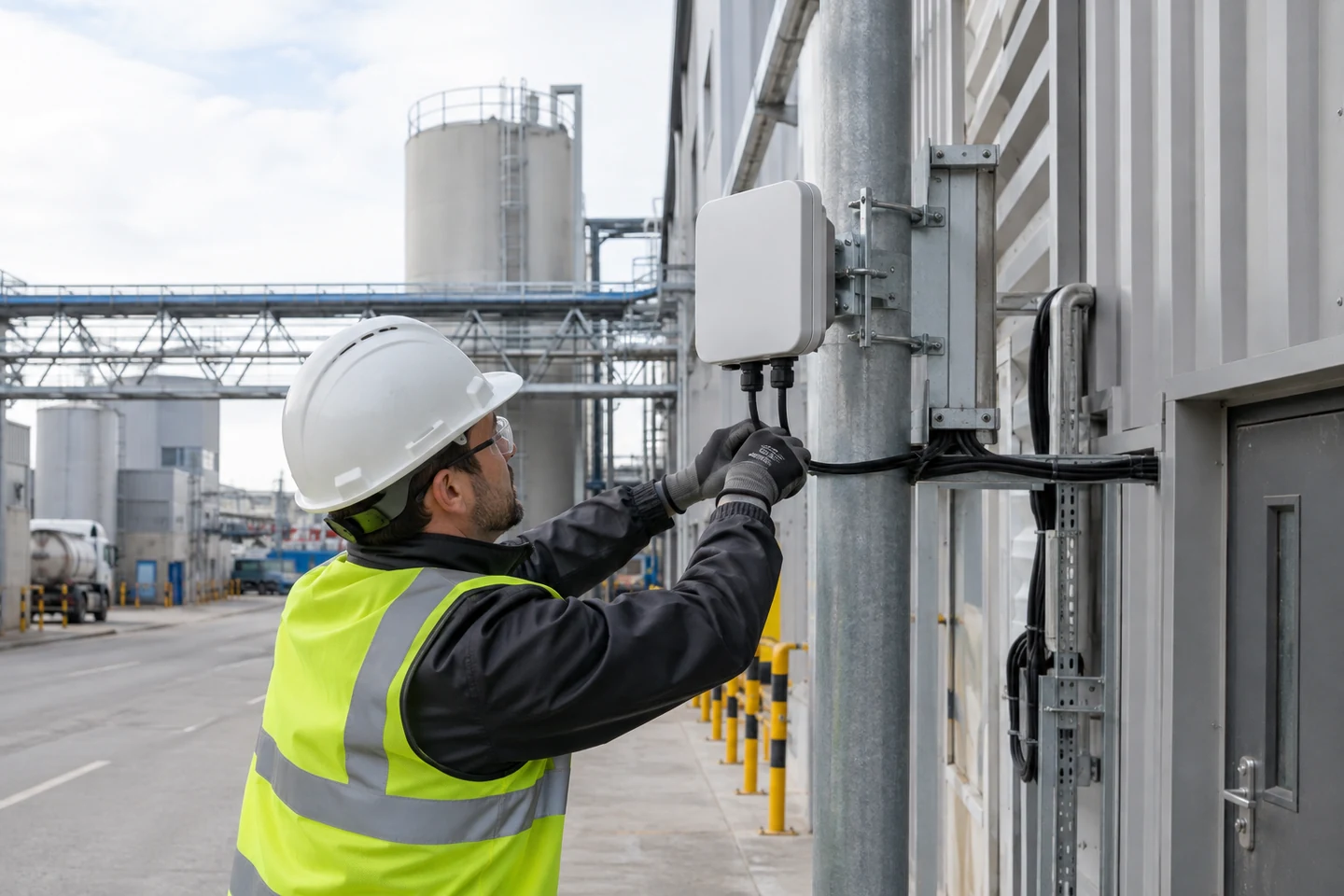
l Outdoor APs:
High-density: TD-AX-WG (Wi-Fi 6, 100m radius, 180 users).
Budget-friendly: TX26-12KY-H (Wi-Fi 5, 60° directional coverage, 100 users).
3) Backhaul:
Fiber or wireless bridges (e.g., 60GHz mmWave) for AP-to-core connectivity.
4) Management:
Todaair Cloud Platform & Mobile App for remote monitoring.
5. Key Implementation Steps
1) Site Survey:
Heatmap analysis for coverage gaps and interference sources.
Identify signal attenuation from obstacles (metal walls, concrete).
2) AP Placement:
Indoor: 1 AP per 200–500 m2 (adjust for wall materials).
High-density zones: Add 1 AP per 50–100 users (prioritize 5GHz).
3) Channel Planning:
2.4GHz: Use channels 1/6/11 only.
5GHz: Activate DFS channels (52–144) to avoid radar interference.
Wi-Fi 6E: Leverage 6GHz band.
4) Roaming Optimization:
Enable 802.11r/k/v protocols for sub-50ms handoffs.
Uniform SSID configuration to prevent manual reconnection.
5) Security Policies:
Enterprise authentication: 802.1X (EAP-TLS, PEAP).
Guest network: Captive Portal with SMS/WeChat auth and data isolation.
6. Case
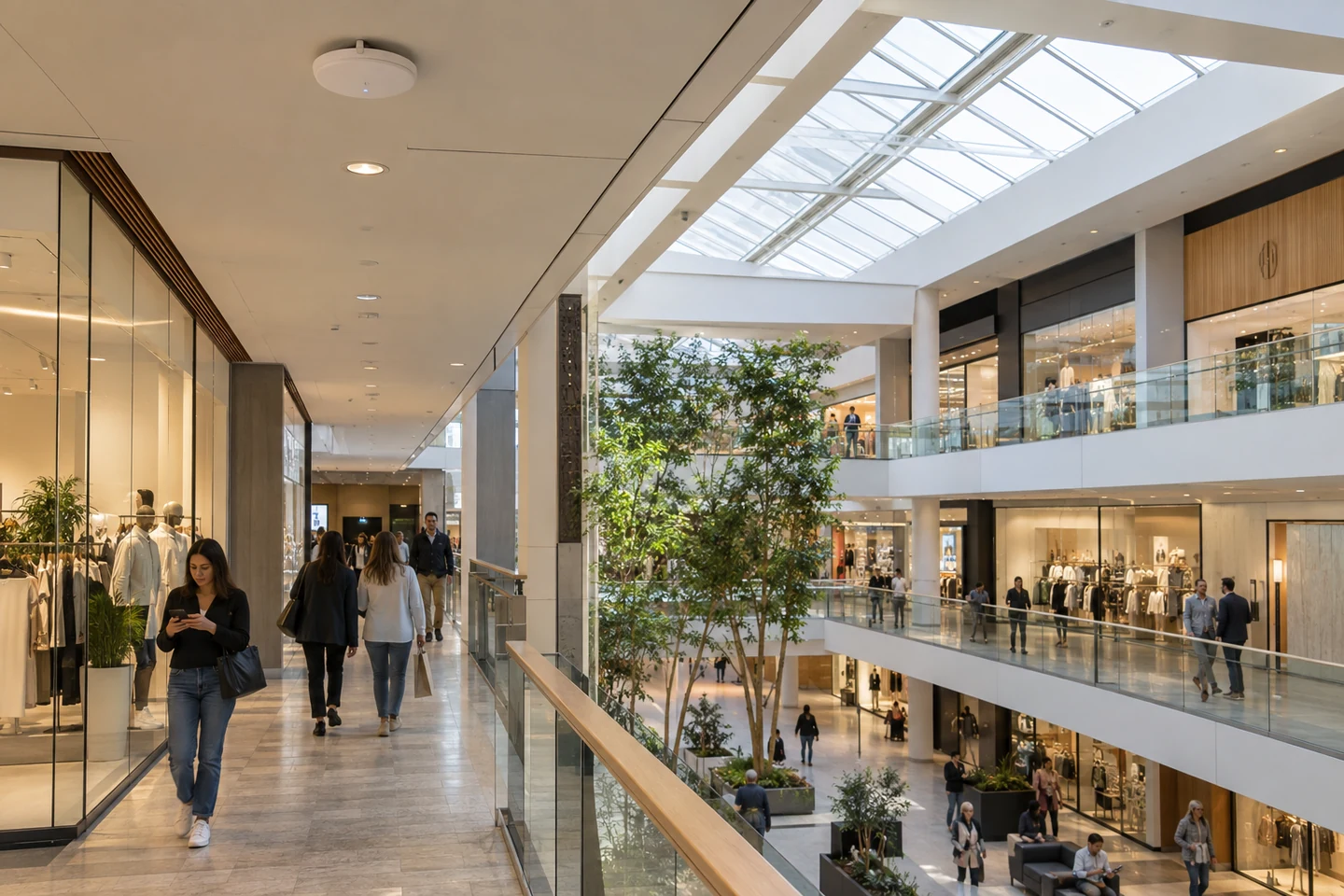
1) Scenario 1: Shopping Mall (50,000 m2)
Requirements: Full-floor coverage, multi-user concurrency, free guest Wi-Fi.
Solution:
APs: 100x INAX50Y-H V3.0 (Wi-Fi 6 dual-band).
Deployment: Ceiling-mounted APs + wall-mounted fillers (500m2 per AP).
Backhaul: 10G fiber to floor switches.
Management: Real-time traffic monitoring.
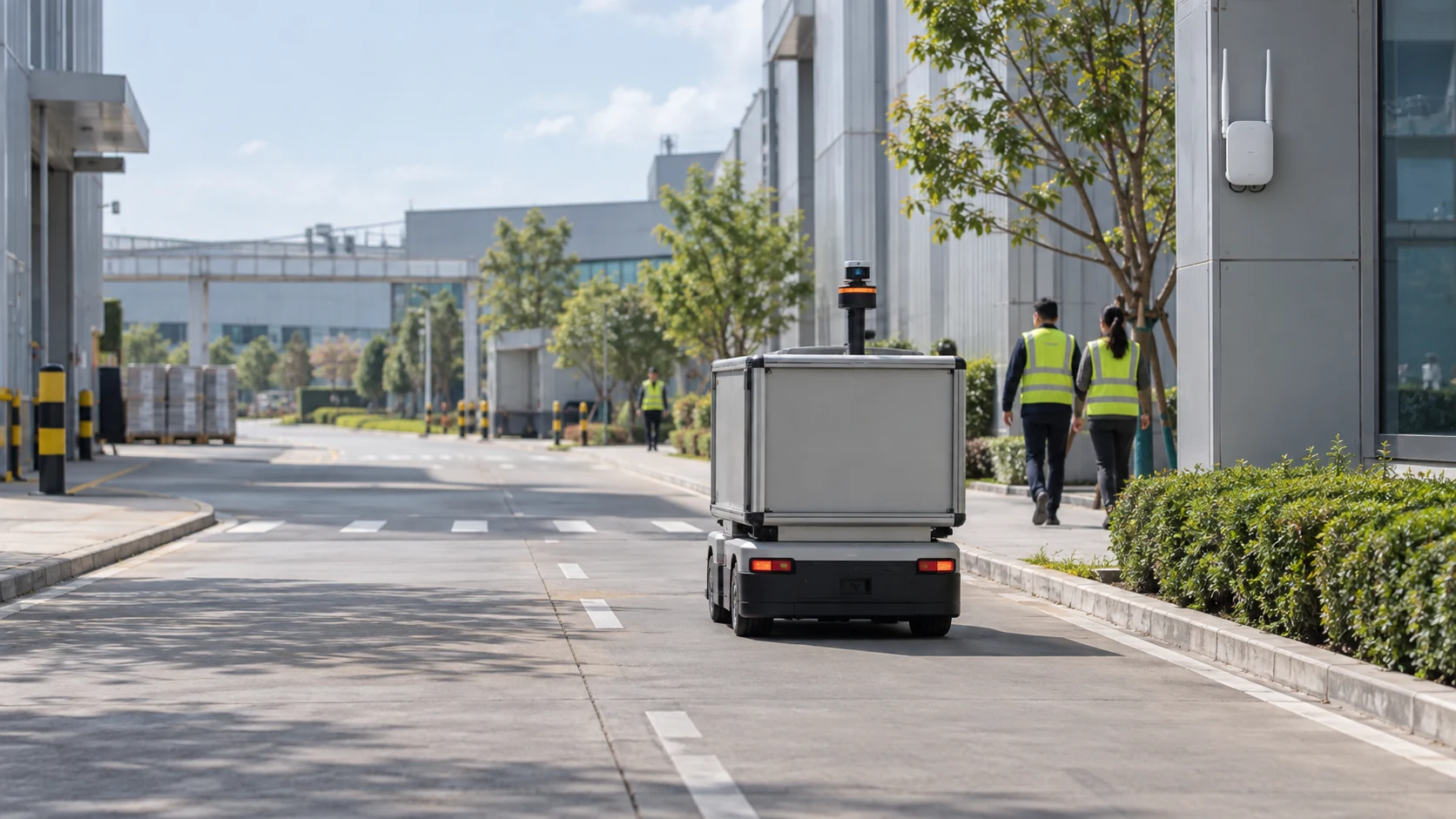
2) Scenario 2: Smart Factory (Outdoor Campus)
Requirements: 100,000 m2 coverage for AGVs, AR inspections (low latency).
3) Solution:
APs: TD-AX-WG (Wi-Fi 6, IP67-rated).
Network: Mesh backhaul + fiber backbone, redundant critical zones.
QoS: Prioritize AGV control signals via DSCP tagging.
7. Operations & Optimization
1) AI-Driven Tuning:
2) Tools like Cisco DNA Assurance for automatic interference resolution.
3) Load Monitoring:
Deactivate underutilized APs to save energy.
Weak Signal: Increase AP density or add external antennas.
Authorized Failures: Audit Radius server/certificate configurations.
8. Key Benefits
1) High Performance: Wi-Fi 6 enables VR/AR and 4K streaming.
2) Scalability: Modular design with plug-and-play AP expansion.
3) Cost Efficiency: 30%+ savings vs. traditional DAS deployments.
9. Conclusion
Large-scale Wi-Fi coverage demands scenario-specific designs, precise channel planning, and AI-powered management. Future-proofing with Wi-Fi 7 (320MHz bandwidth, 16K QAM) will further enhance throughput and reduce latency for emerging applications.