
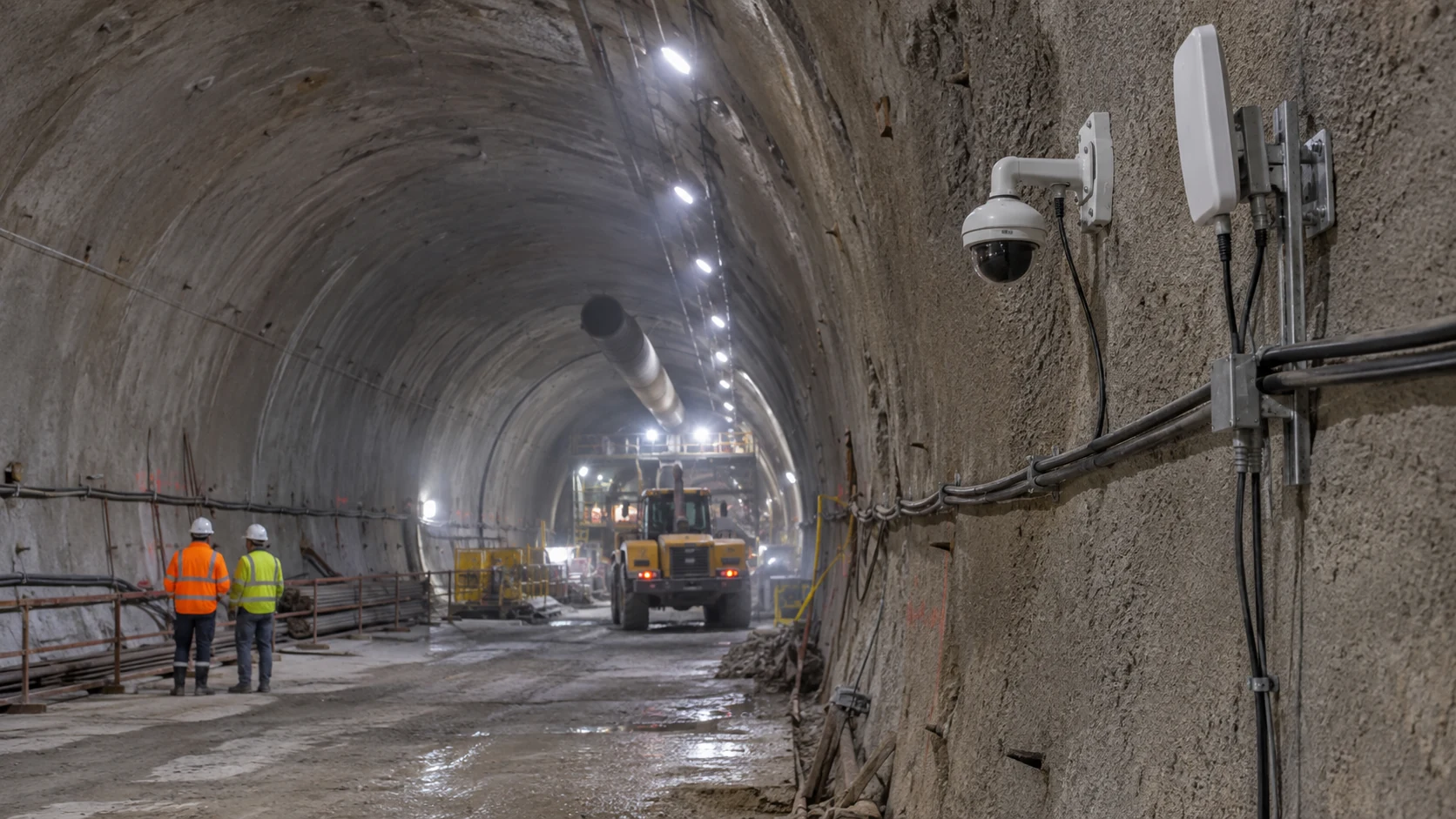
1. Project Overview
With the rapid development of China"s economy, tunnel construction continues to expand across provinces, driving a heightened awareness of modern safety management among relevant authorities. To enhance construction site safety, strict control measures are required not only for site entrances/exits and access gates but also for standardized and safe construction practices within tunnels.
Tunnel environments are complex, demanding solutions that enable rapid response to emergencies. Management agencies need intuitive real-time visualization of construction statuses, traffic conditions, equipment operations, and environmental data to eliminate hazards and ensure worksite safety for both construction personnel and future commuters.
2. Demand Analysis
Ensure stable connectivity between the monitoring center and all tunnel monitoring points for real-time surveillance.
1) Avoid structural damage from wired deployments in fragile geological environments, wireless solutions reduce construction complexity, time, and costs.
2) Wireless bridges must maintain transmission quality despite signal attenuation from multiple tunnel bends.
3) Ensure interference-free transmission in high-dust tunnel environments.
4) Guarantee stable operation of wireless bridges under intense vibrations from ongoing construction activities.
5) Enable immediate video transmission to the control center during emergencies (e.g., accidents, injuries) for timely dispatch of personnel.
6) Support scalable integration of additional monitoring points to form a comprehensive wireless surveillance network with expressway systems.
3. Solution Design
1) Design Concept
The tunnel comprises dual left/right bores, each ~4 km in length.
Left Bore: Straight alignment with high dust and vibrations. Deploy Tuoda 5 km project-specific wireless bridges.
Right Bore: Curved alignment requiring signal relay. Install a pair of intermediate wireless bridges to receive, amplify, and retransmit signals, ensuring stable connectivity to terminal bridges.
2) Topology Diagram
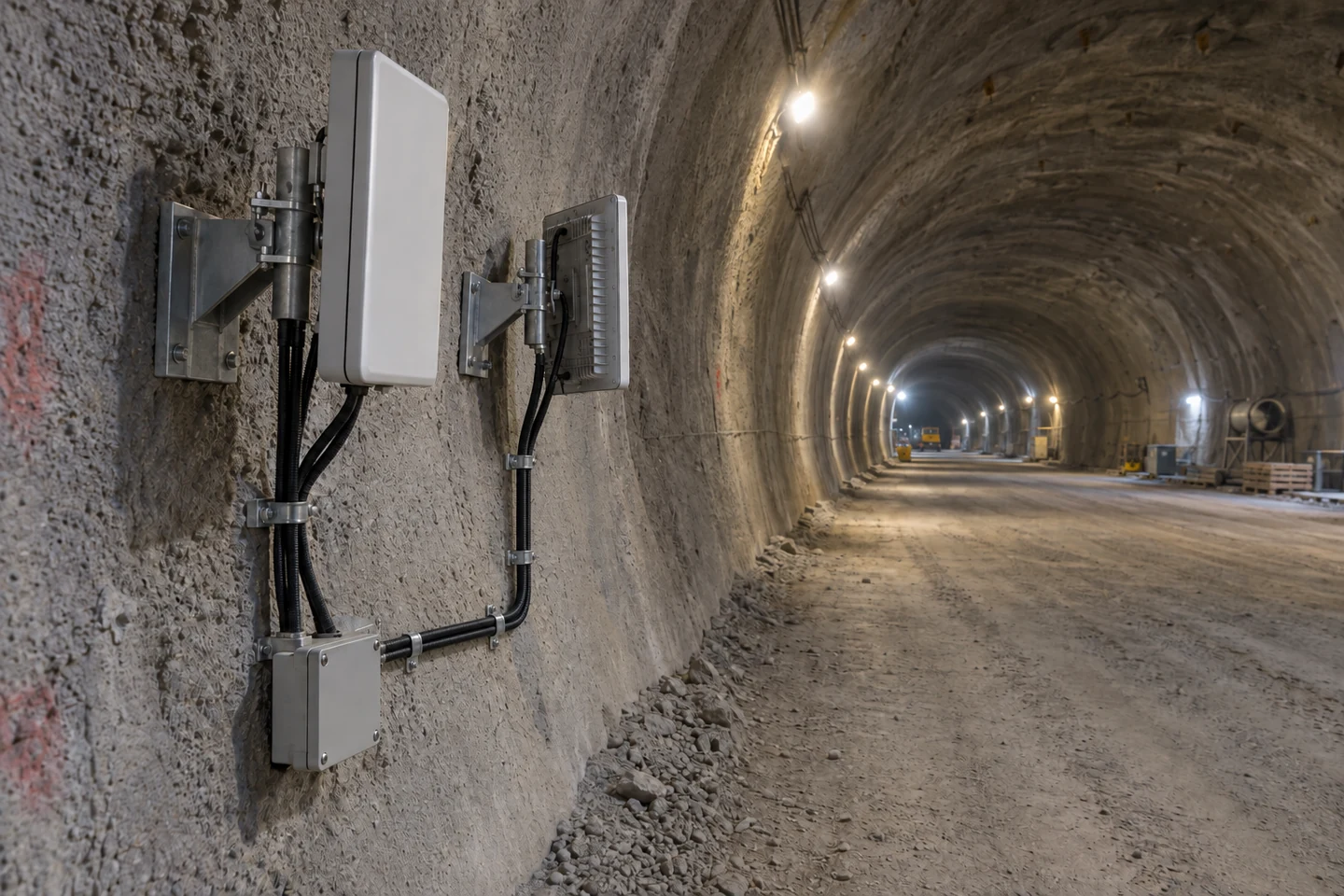
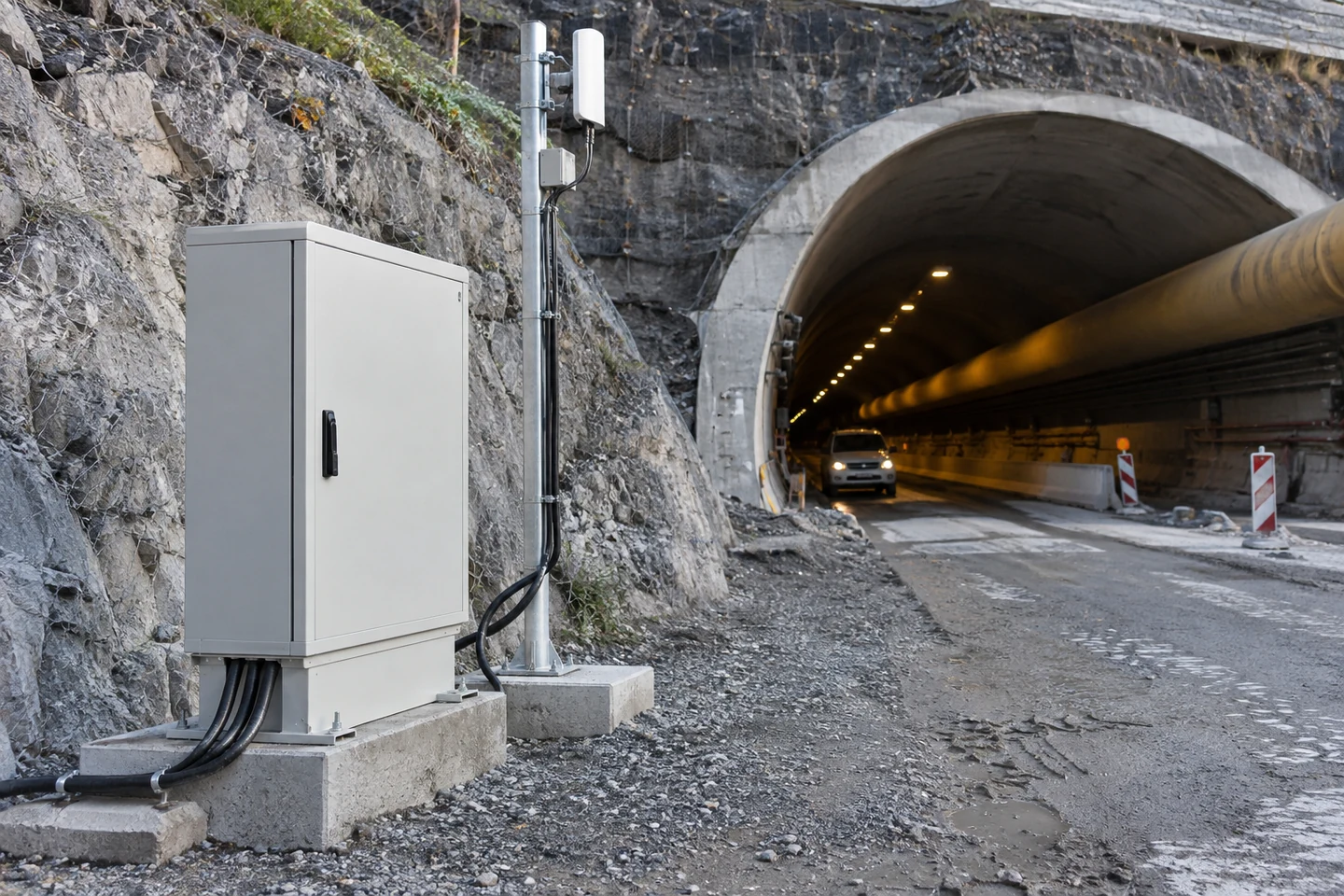
4. On-Site Implementation
5. System Features
1) Robust Performance: Stable operation in extreme environments.
2) Efficient Configuration: Real-time signal diagnostics through user-friendly interfaces.
3) Scalability: Seamless integration with sensors, personnel positioning systems, and remote operations.
4) Cost Efficiency: Minimized infrastructure disruption and reusable hardware.
6. Core Value Proposition
1) Real-Time Monitoring for Tunnel Excavation: Wireless bridges enable live video feeds from excavation fronts, allowing supervisors to ensure worker safety and equipment compliance.
2) Resilient Transmission: Microwave technology eliminates risks of physical cable damage from heavy machinery.
3) Multi-System Integration: Supports concurrent transmission of video, sensor data, and operational commands.
4) Future-Proof Flexibility: Modular design adapts to evolving monitoring needs across tunnel life cycles.