
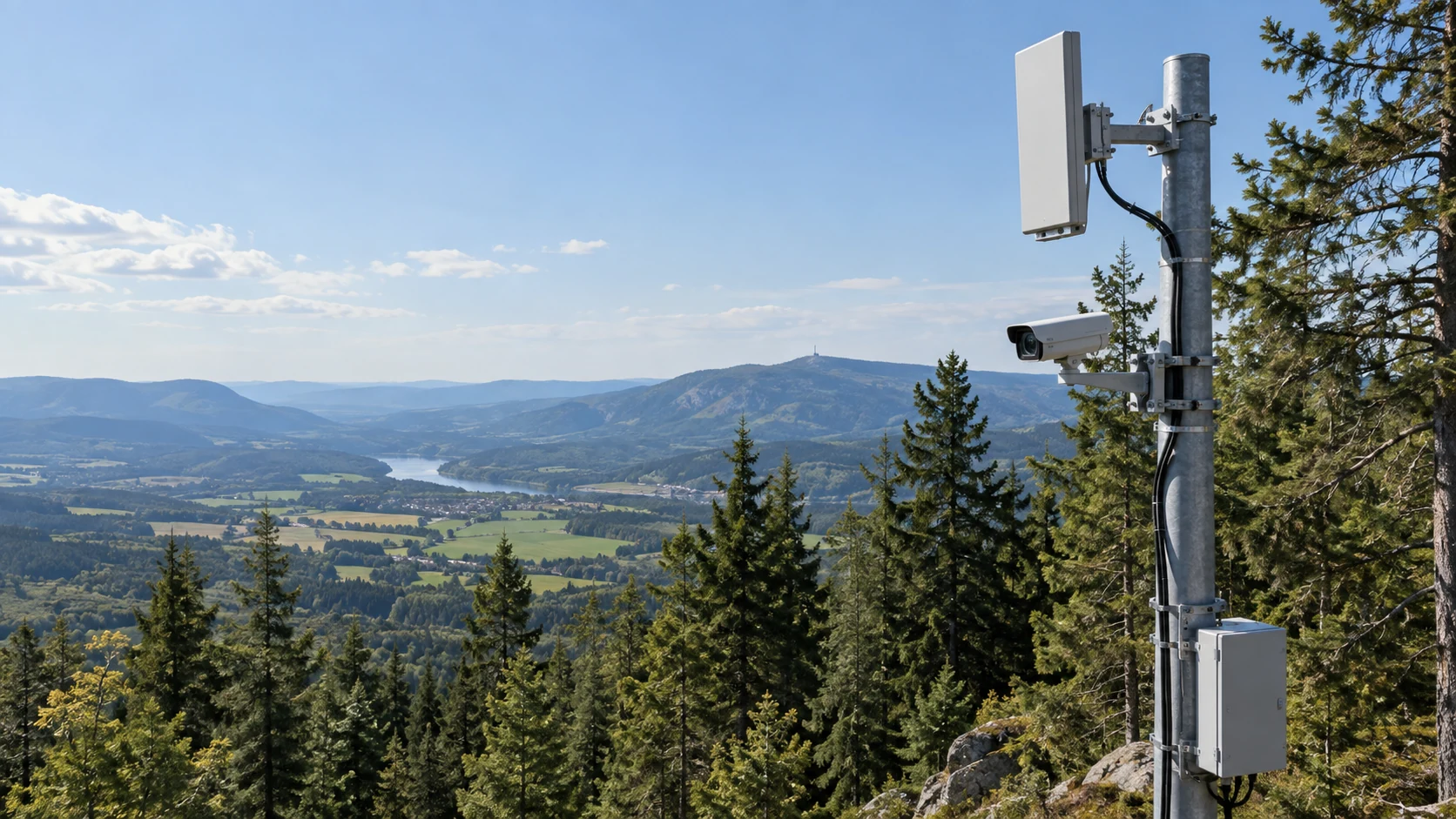
Wireless Bridge Implementation
1. Project Background & Requirements Analysis
With the growing adoption of security monitoring, industrial inspections, and environmental sensing, long-range wireless transmission has become critical to overcome cabling challenges and achieve wide-area coverage. This solution leverages wireless bridge technology to deliver a stable, low-latency surveillance system with the following specifications:
1) Transmission Range: 5–15 km (line-of-sight conditions).
2) Bandwidth: Supports multiple HD/4K video streams.
3) Stability: Anti-interference design with resilience to harsh weather (rain, snow, wind).
4) Rapid Deployment: No complex cabling, plug-and-play installation.
5) Scalability: Accommodates future camera/sensor integration.
2. Design Principles
1) High Reliability: Industrial-grade wireless bridges with dual-band (2.4GHz/5.8GHz) and MIMO technology.
2) Low Latency: Optimized protocols for real-time video streaming (<50ms).
3) Security: WPA3 encryption, MAC address filtering, and VLAN isolation.
4) Environmental Robustness: IP67-rated housing, operational in -40℃ to 70℃.
3. System Architecture
1) Edge Devices
Cameras: Any 4K H.265-encoded models
Sensors (Optional): IoT devices for temperature, humidity, smoke detection, etc.
2) Wireless Transmission Layer
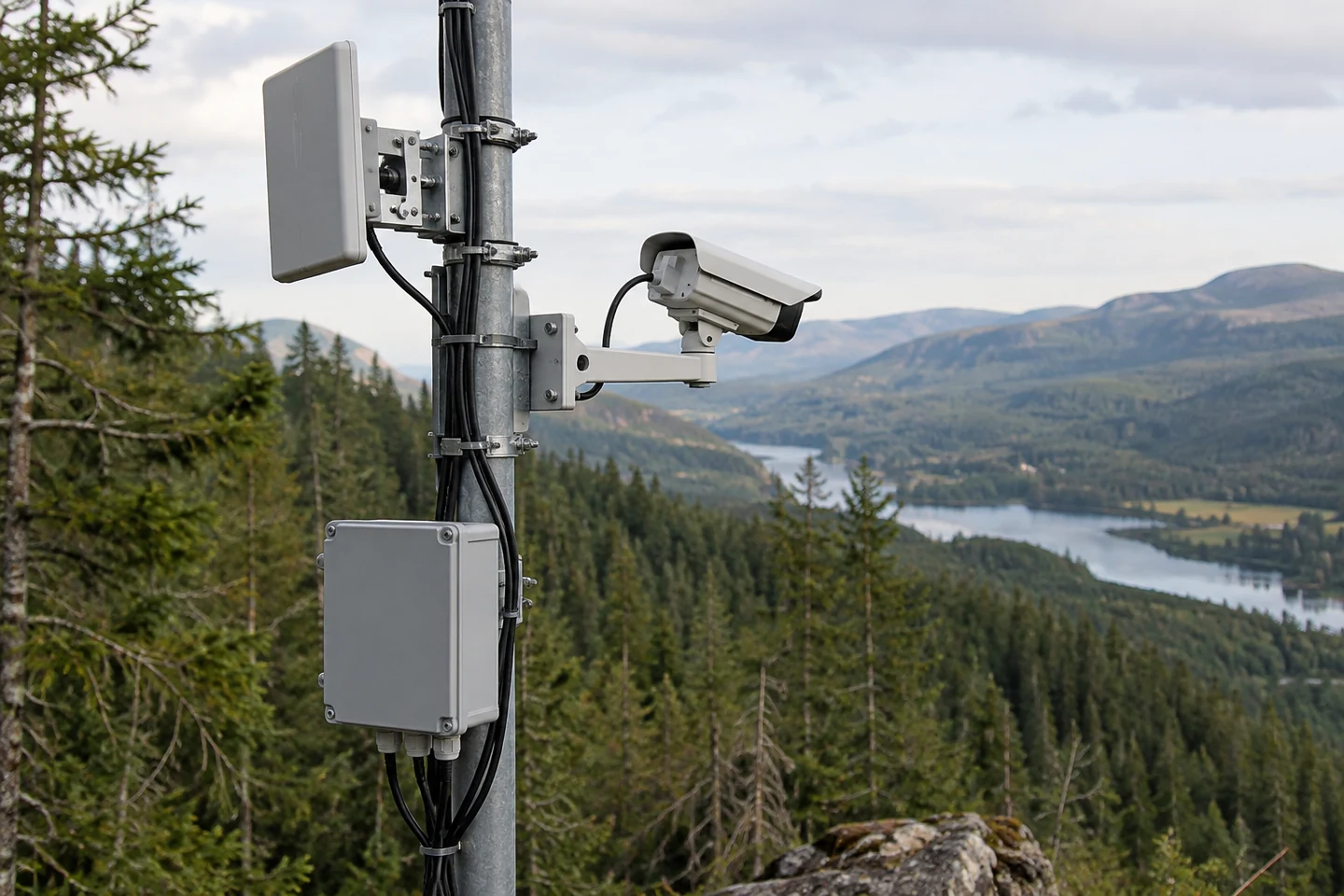
Wireless Bridges: Deployed in Point-to-Point (PTP) or Point-to-Multi-Point (PTMP) modes.
Devices Choosing:
Long-Range: Todaair TX23-9525K V3.0 (5.8GHz, 900Mbps, 15km range).
Cost-Effective: Todaair DIP3526-H (5.8GHz, 300Mbps, 5km range).
Antennas: Integrated high-gain directional antennas to minimize signal loss.
3) Relay Nodes (Optional)
Extend coverage in complex terrains using intermediate bridges.
4) Backend Management
NVR: Multi-channel video storage and live viewing.
Management Software: Device status monitoring, alert notifications, and remote configuration.
4. Deployment Guidelines
1) Line-of-Sight (LOS) Requirements
Ensure unobstructed paths between transceivers (no buildings/trees).
Use GPS tools or drones for terrain surveys.
2) Frequency Selection
5.8GHz: High bandwidth, low interference (strict LOS required).
2.4GHz: Better diffraction for non-LOS scenarios but prone to Wi-Fi interference.
3) Power & Sensitivity Tuning
Adjust transmit power based on distance to avoid signal saturation/weakness.
Enable Dynamic Frequency Selection (DFS) to mitigate radar interference (5.8GHz band).
4) Interference Mitigation
Deploy dual-polarized antennas (horizontal + vertical) to reduce multipath effects.
Activate QoS prioritization to reserve bandwidth for video streams.
5. Case
1) Scenario 1: Forest Fire Monitoring (10km)
l Hardware:
Bridge: Todaair TX23-9525K V3.0 (5.8GHz, 900Mbps).
Camera: 4K thermal imaging camera with fire detection.
Power: Solar + battery (remote areas).
Bandwidth: 20Mbps per 4K stream, 10 streams require 300Mbps (50% redundancy).
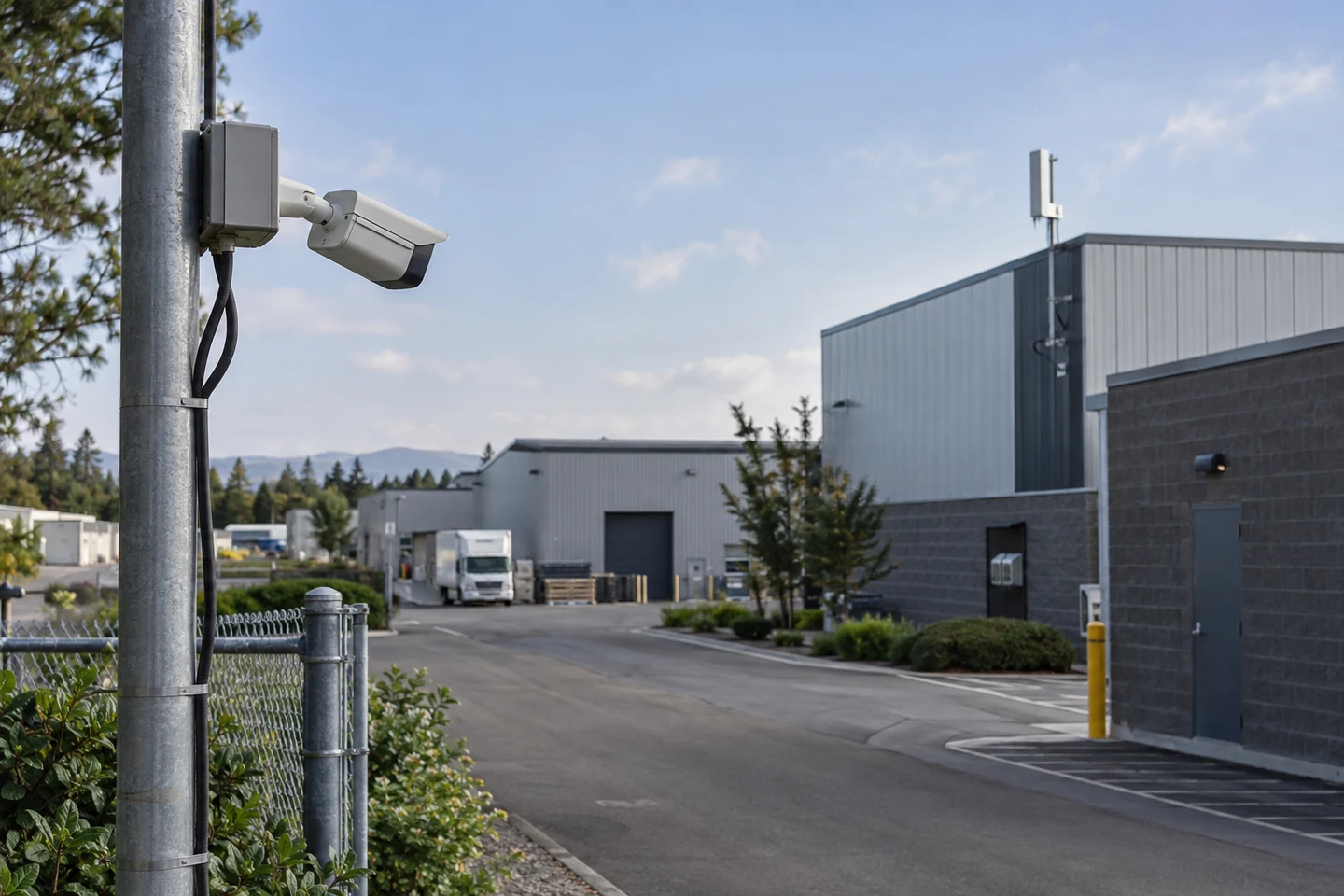
2) Scenario 2: Industrial Park Surveillance (3km)
l Hardware:
Bridge: Todaair DIP3526-H (5GHz, 300Mbps).
Camera: H.265 1080P bullet cameras.
Network Mode: PTMP (central hub linked to multiple edge devices).
6. Operations & Troubleshooting
1) Remote Management: Mobile APP for off-site monitoring.
2) Maintenance:
Inspect waterproof seals periodically.
Monitor RSSI (signal strength), SNR (signal-to-noise ratio), and bandwidth usage.
Fault Resolution:
3) Signal Loss: Verify alignment, power supply, and device temperature.
Bandwidth Bottlenecks: Reduce camera count/resolution or enable H.265 compression.
7. Key Advantages
1) Cost Efficiency: Reduces deployment costs by over 50% vs. fiber optics.
2) Rapid Setup: Single PTP link deployment within 24 hours.
3) Flexible Expansion: Seamless integration of new cameras/sensors.
8. Conclusion
This wireless bridge-centric solution combines high-gain antennas and optimized networking strategies to address long-range video transmission in challenging environments. Customized parameter tuning and proactive maintenance ensure sustained system stability and performance.