
1. Case
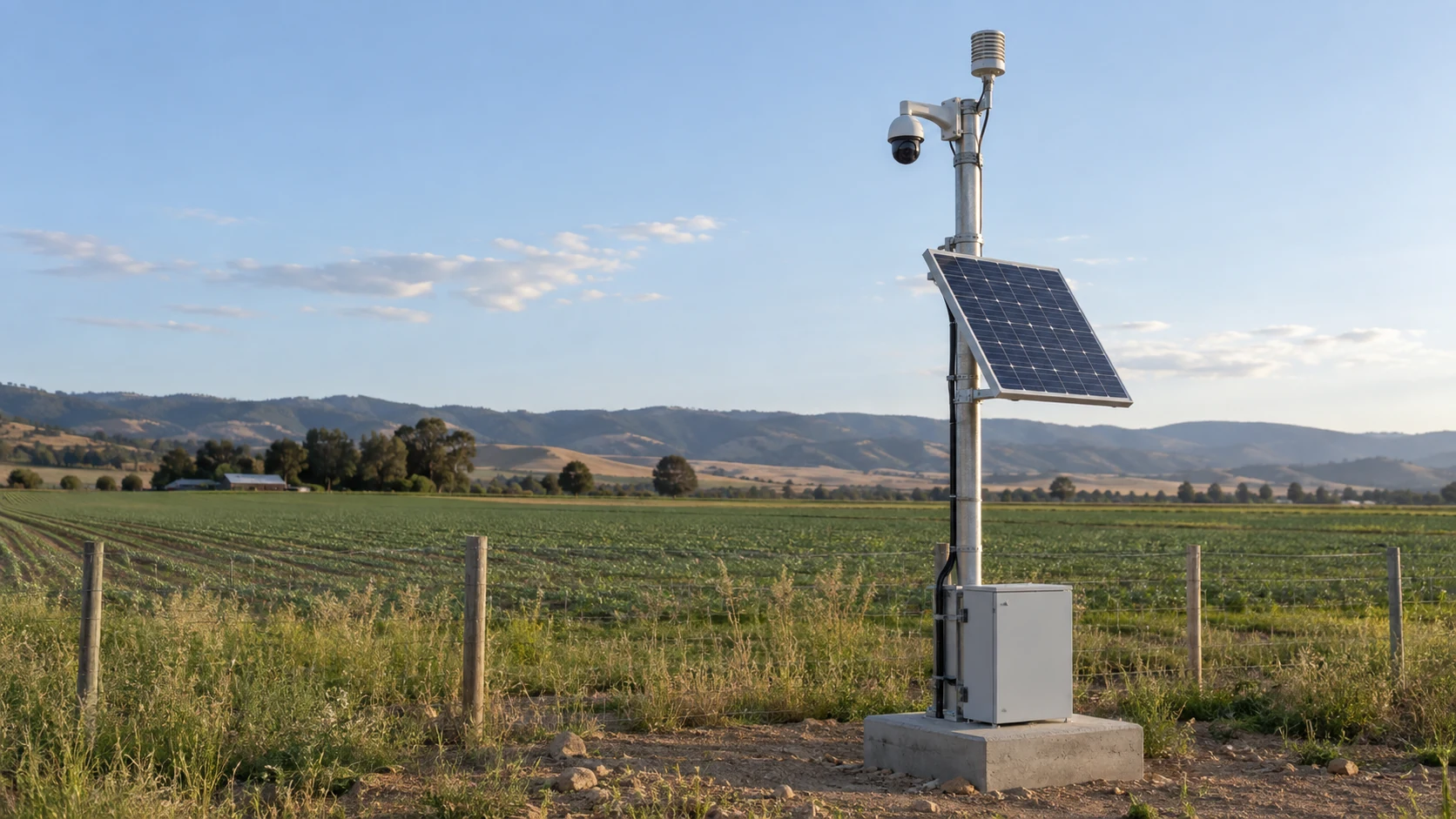
Designed for remote areas or temporary deployments lacking grid power and network infrastructure, including:
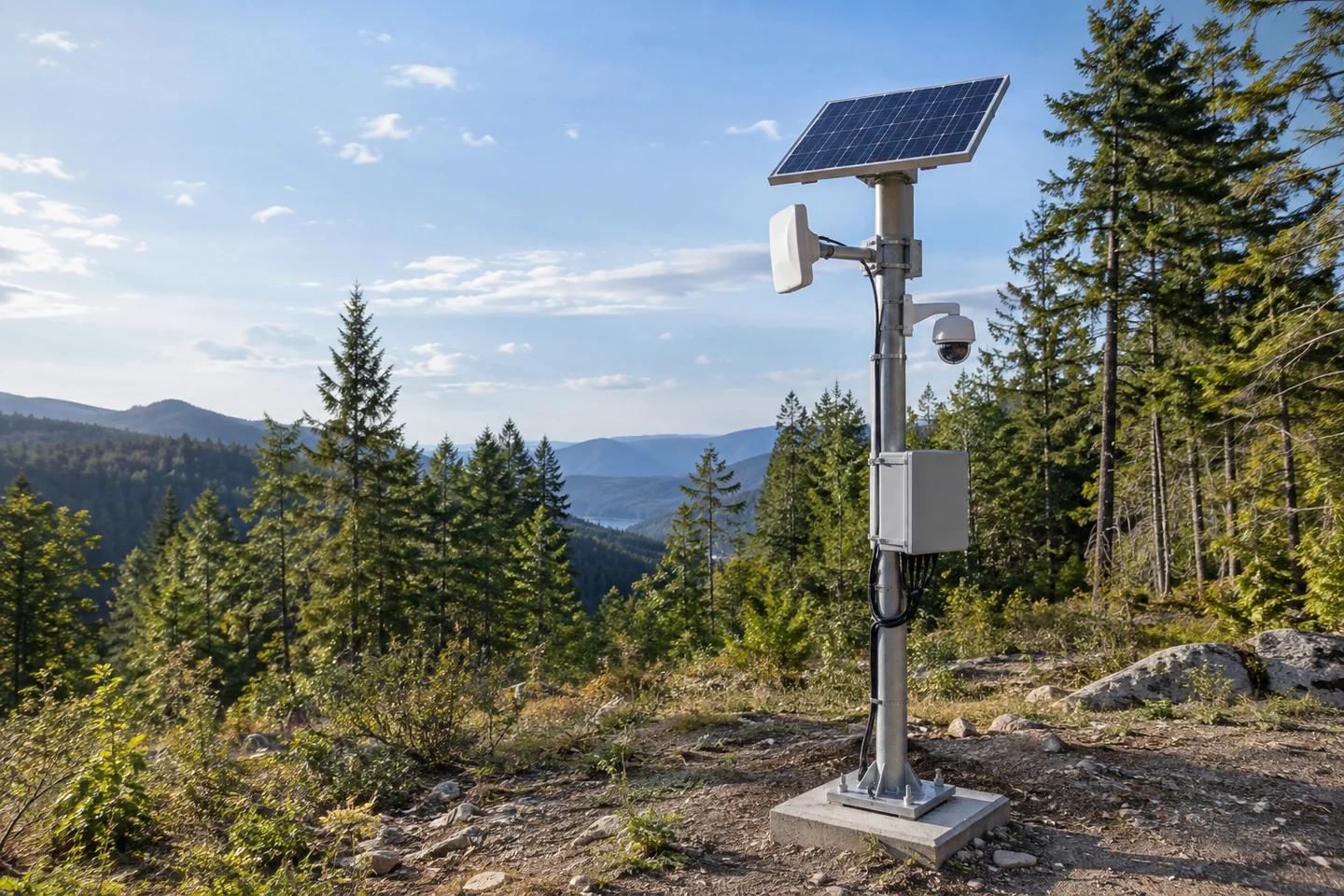
l Forest fire monitoring
l Agricultural/pasture environmental sensing
l Border/field security
l Disaster response
Core Challenges:
1) No Stable Power: Reliance on renewable energy.
2) No Network Coverage: Requires 4G/LTE or alternative wireless transmission.
3) Harsh Environments: Devices must withstand water, dust, and extreme temperatures (-40°C to 70°C).
2. Solution Architecture
1) Power Supply Module
Solar Energy:
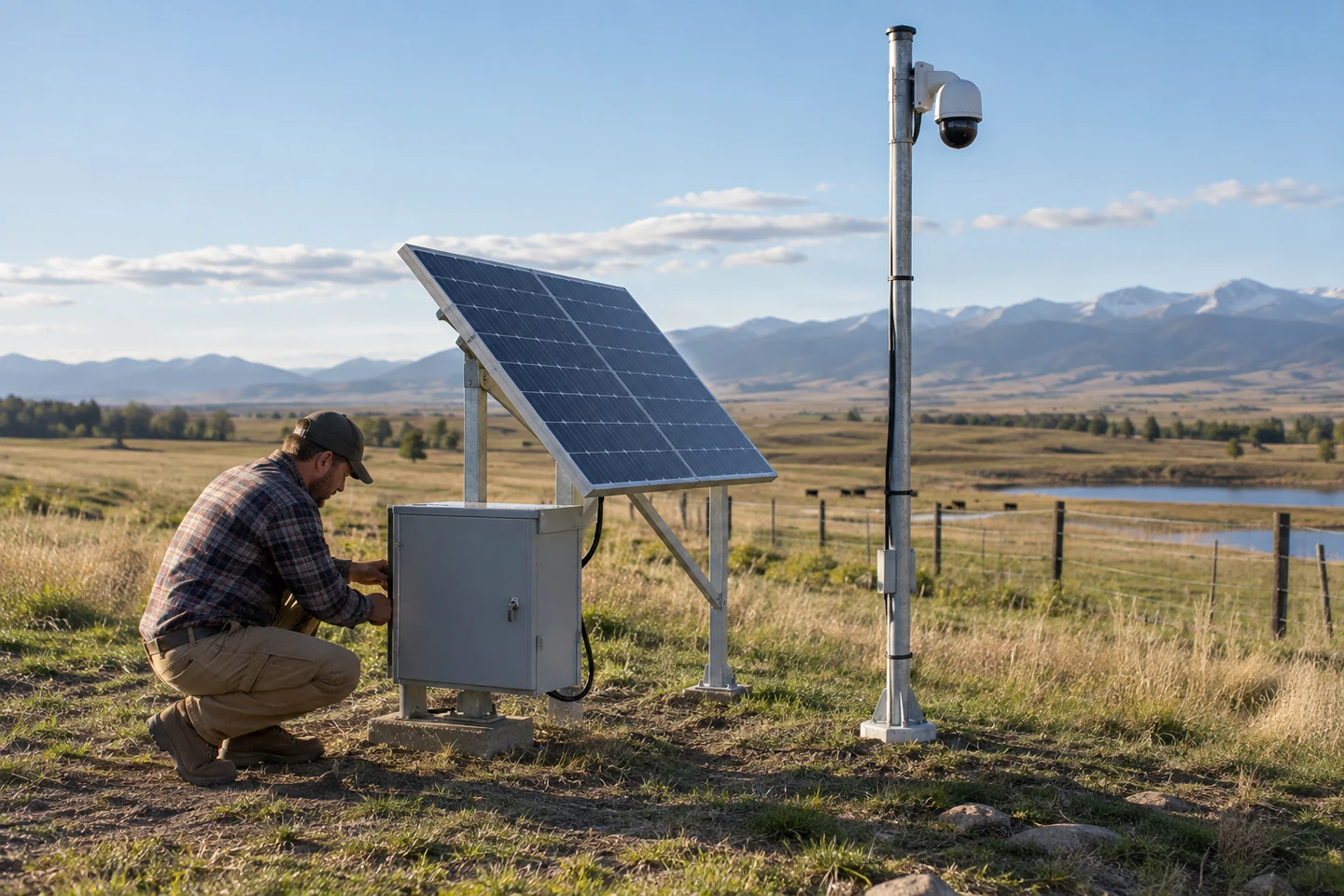
Components: High-efficiency monocrystalline panels (e.g., 100W/24V) + lithium batteries (e.g., 12V/100Ah).
Design: 3–5 days of autonomy in cloudy/rainy conditions, MPPT controller for optimal charging.
Energy Harvesting (Optional):
Vibration/thermal generators for mechanical or high ΔT environments (e.g., railways).
2) Surveillance Terminals
Low-Power Cameras:
Features: PIR motion activation, 0.5W standby, ≤5W active.
Environmental Sensors:
Types: Temperature/humidity, smoke, gas detectors.
Operation: Scheduled wake-up (e.g., every 10 minutes), ≤0.1W in sleep mode.
3) Data Transmission
Wireless Bridges:
Range: ≤30km point-to-point (PTP), relay nodes for obstructed/longer distances.
Durability: IP65-rated, -40°C to 70°C operation.
4G Routers:
Fallback connectivity for critical alerts, IP65-rated and wide-temperature tolerant.
4) Edge Computing (Optional)
AI Processing: Jetson Nano for on-device analytics (e.g., fire detection), transmitting only alerts to conserve bandwidth.
3. Deployment Examples
1) Scenario 1: Forest Fire Monitoring (Zero Grid/Network)
Hardware:
l Camera: Solar-powered 4G camera with AI fire detection.
l Sensors: Smoke + temperature/humidity (LoRa transmission).
l Comms: 30km wireless bridge + 4G backup.
l Power: 200W solar panel + 200Ah battery (7-day autonomy).
l Data Strategy:
Routine: LoRa sensor data (1MB/day).
Alerts: Compressed GPS coordinates + images (10KB).
2) Scenario 2: Farmland Monitoring (Partial Coverage)
Hardware:
l Sensors: Soil moisture + weather station (NB-IoT).
l Camera: Time-lapse imaging (3x/day) stored on SD card.
l Power: 50W solar panel + 50Ah battery (continuous operation).
l Data Strategy: Real-time monitoring via Todaair Cloud/APP.
4. Technical Specifications
1) Ultra-Low Power Design:
MCU: STM32L4 series (1μA sleep mode).
Protocols: CoAP/MQTT-SN for minimized overhead.
2) Interference Resistance:
Redundant links: Failover between 4G and wireless bridges.
Compression: JPEG-LS for images, LZ77 for text.
3) Environmental Robustness:
IP65 enclosure, -40°C to 85°C operation.
Lightning protection: Grounding + Phoenix Contact FLT surge suppressors.
5. Operations & Management
1) Remote Monitoring: Todaair Cloud/APP for battery, signal, and health metrics.
2) Self-Healing:
Watchdog timer for auto-reboot.
Drone-assisted solar panel cleaning or auto-rotating mounts.
6. Key Advantages
1) Grid Independence: No reliance on power or public networks.
2) Longevity: 5+ years lifespan (solar + lithium).
3) Modularity: Scalable sensors/communication modules.
7. Limitations & Mitigations
1) Bandwidth Constraints: AI preprocessing to prioritize critical data.
2) Maintenance Challenges: Modular design for rapid component replacement.
8. Conclusion
This solution integrates energy autonomy, low-power hardware, and hybrid wireless/4G transmission for off-grid surveillance. Deployment requires balancing real-time needs, cost, and maintenance—e.g., prioritizing fire alerts in forests vs. periodic data in agriculture. Future enhancements may leverage satellite links or improved energy harvesting.